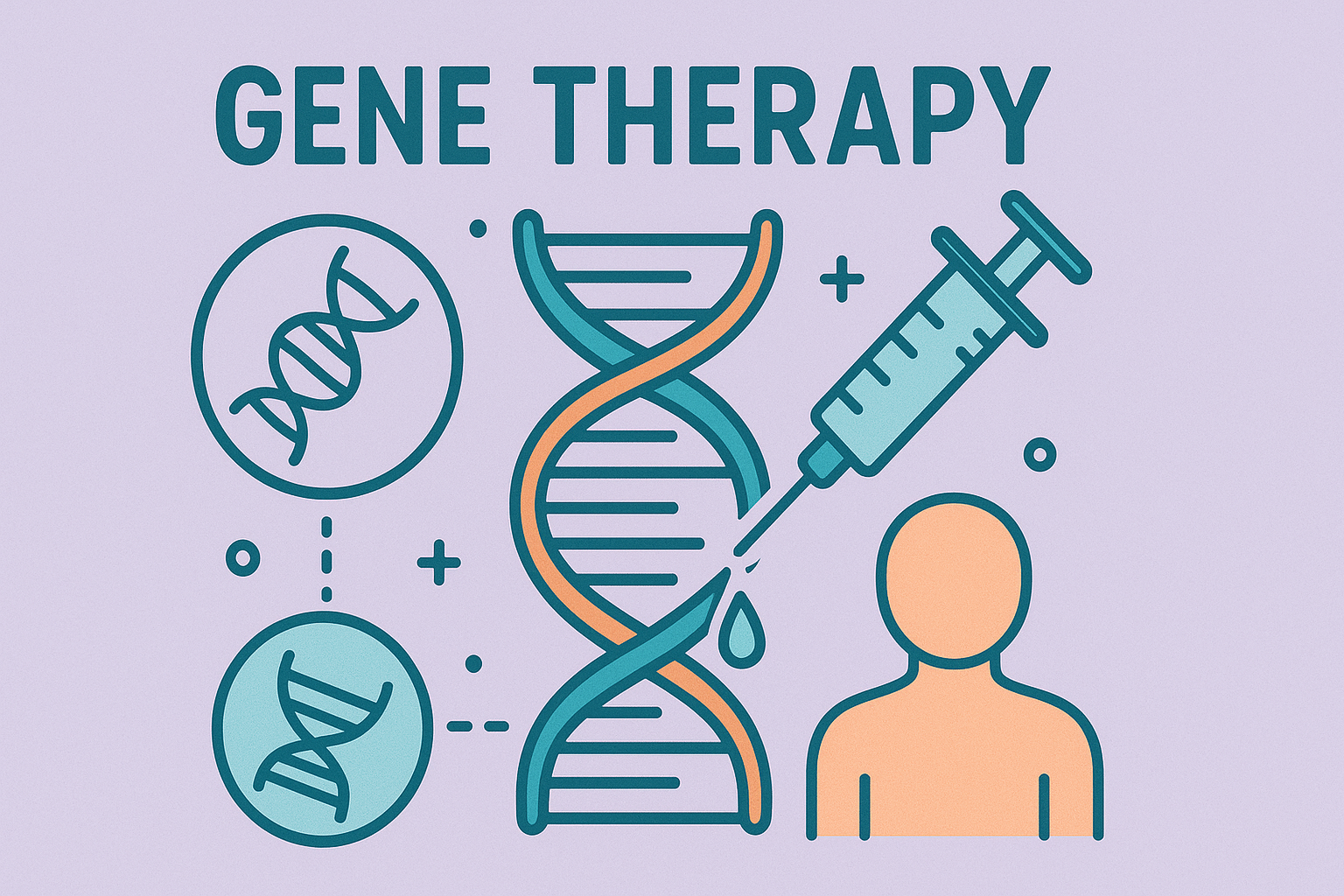
Gene Therapy — Fixing Broken Genes to Prevent Disease
Gene Therapy vs. Gene Editing — Two Paths to the Same Goal
Modern medicine now works directly with DNA to prevent disease before it starts. Two of the most powerful tools are gene therapy and gene editing. They’re often mentioned together, but they use very different approaches. Understanding the difference makes it easier to see how each one restores health—and why both will shape the future of longer, healthier lifespans.
Gene therapy adds what the body is missing.
If a gene is damaged or not working, doctors provide a healthy replacement so cells can function normally again. It doesn’t rewrite your original DNA—it simply gives the body a working copy to follow. This approach is ideal when the original gene is too broken or too risky to repair directly.
Gene editing fixes the gene you already have.
Tools like CRISPR act like molecular repair kits. They locate the exact DNA mistake that causes a disease and correct it. Instead of adding a new copy, gene editing changes the faulty instruction so it behaves the way it should. This is especially effective for conditions caused by a single, precise mutation.
In simple terms:
Gene therapy works around the problem.
Gene editing repairs the problem at its source.
Both aim to restore healthy function—they just take different paths to get there.
Real-world results are already changing lives. Gene therapy has helped children born with immune disorders, inherited blindness, and metabolic diseases by giving them the genes they need to grow, see, and thrive. Gene editing has cured sickle-cell disease in many patients, eliminating symptoms that once lasted a lifetime. Trials for heart disease, cancer, and other inherited conditions are moving quickly.
As these technologies advance, doctors will use whichever method is safest and most effective for each condition. Sometimes the right answer is to add a working gene; sometimes it’s to repair the one that’s broken. What matters most is the outcome: preventing disease early and supporting longer, healthier lives.
Gene Therapy in Action — Replacing What the Body Needs
For many years, people born with certain forms of inherited blindness grew up knowing their vision would slowly fade. The problem wasn’t their eyes—it was a single gene that wasn’t giving the retina the instructions it needed to process light. No medication could fix it, and nothing could slow the decline.
Gene therapy offered a new path. Instead of trying to repair the broken gene, doctors delivered a healthy copy directly into the cells of the retina. Once inside, the new gene began doing the job the original couldn’t—producing the protein needed for the eye to detect light. The treatment didn’t rewrite the patient’s DNA. It simply added the missing instructions so the cells could work normally again.
The results were life-changing. Children who once struggled to see in dim rooms could suddenly navigate at dusk. Some could read signs, recognize faces more clearly, and move through the world with confidence for the first time. A single treatment restored function that their bodies had never been able to produce on their own.
This is the core idea of gene therapy: when a gene is too damaged to fix, you give the body a new one that works. Gene editing would try to repair the original gene itself. Gene therapy takes a different path—it works around the problem by supplying a healthy replacement.
In the years ahead, the same strategy is expected to help people with hemophilia, metabolic disorders, immune deficiencies, and other conditions caused by missing or non-functional genes. Where gene editing corrects DNA, gene therapy supplements it, giving the body the tools it needs to stay healthy. Both approaches represent the future of medicine—two complementary ways to prevent disease and support healthier lifespans.