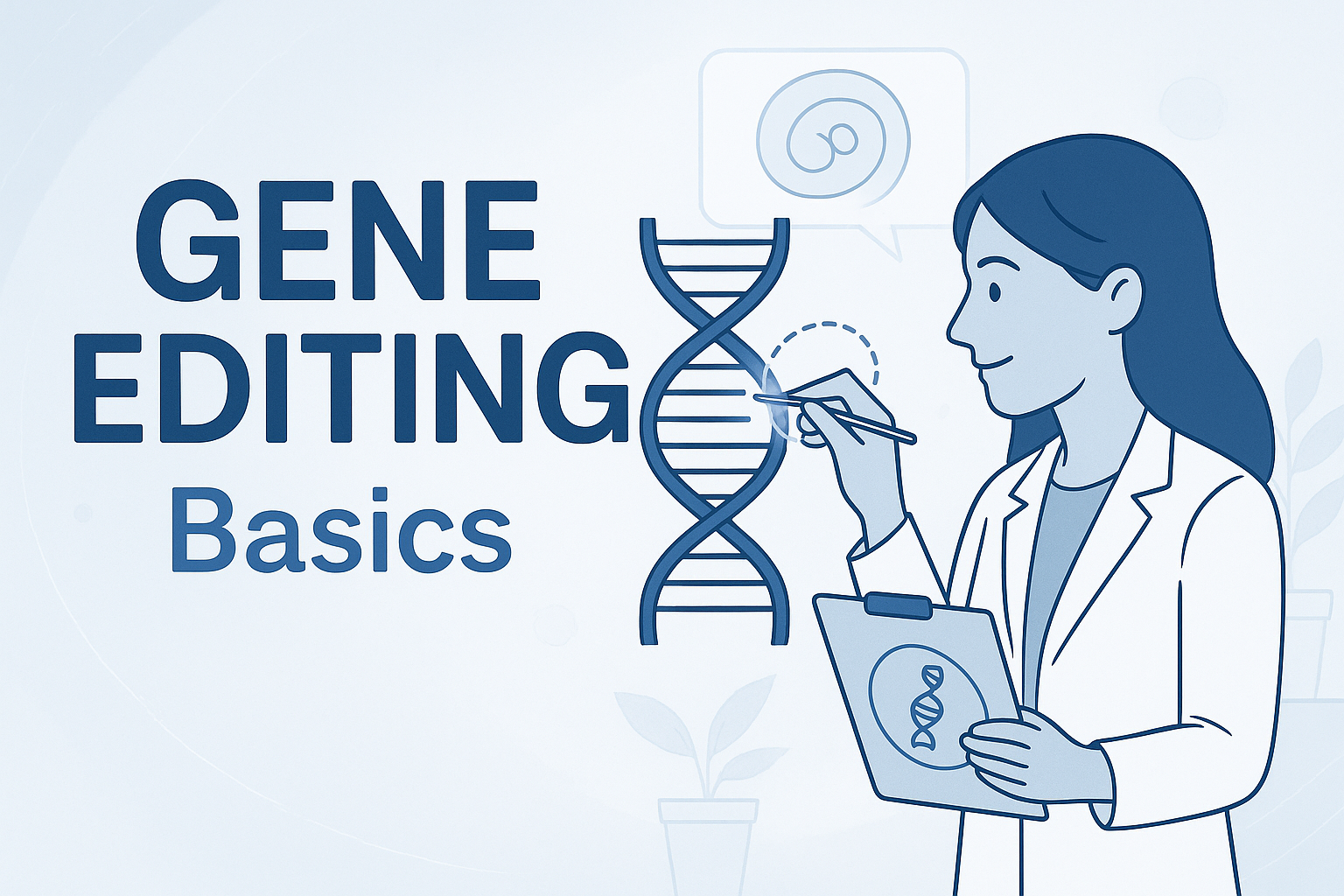
Gene Editing Basics — How Modern Medicine Repairs DNA
Gene Editing Basics — What You Need to Know
Gene editing repairs the cause of disease, not just the symptoms.
Most medical treatments manage illness over time. Gene editing is different: it corrects the underlying DNA error that creates the disease. Instead of lifelong medication, it offers a one-time repair at the source.
Many serious conditions start with a single incorrect letter in our genetic code.
Cystic fibrosis, sickle-cell disease, Tay-Sachs, certain heart disorders, and some forms of inherited blindness all stem from one small mistake in a gene. Fixing that single error can restore the body’s ability to function normally.
Advanced tools can target the exact location where DNA needs repair.
CRISPR, base editors, and prime editors act like molecular GPS systems. They scan the genome, find the precise sequence causing trouble, and correct it with astonishing accuracy. Each new generation of editors gets more precise, efficient, and gentle on the cell.
A corrected gene keeps working for life.
Once the mutation is fixed, the cell uses the repaired gene every time it replicates. That means the correction becomes a permanent part of the body’s biology—no refill, no retreatment, no daily pills.
Early intervention can stop disease before it ever begins.
Repairing a harmful mutation early in development protects children from conditions that otherwise shape their entire lives. It’s not just treatment—it’s prevention at the deepest biological level.
Gene editing can end the inheritance of harmful mutations.
Families affected by genetic disorders often watch the same condition pass from parent to child for generations. Correcting a mutation breaks this chain, ensuring future children never face that burden.
Safety and reliability improve every year.
Today’s editors cause far fewer unintended changes than earlier versions. Researchers now combine multiple layers of safety checks—off-target screening, high-fidelity enzymes, and precise delivery methods—to ensure predictable results.
Therapeutic editing restores health while preserving identity.
The goal is not to redesign appearance, personality, intelligence, or anything that makes someone who they are. It is simply to repair disease-causing errors so a person can live the healthy life their biology intended.
Real people are already benefiting from gene editing today.
Children with inherited immune disorders, adults with sickle-cell disease, and patients facing blindness have seen dramatic recoveries after a single gene-editing treatment. What was once impossible is now happening in hospitals around the world.
Correcting genes early supports longer, healthier lifespans.
Preventing genetic disease means fewer years lost to pain, medication, or disability. The result is more time—time to grow, work, love, explore, and contribute to the world with full strength and vitality.
CRISPR Editing — What It Already Does, and What’s Coming Next
CRISPR is a tool that lets scientists make extremely precise edits to DNA, like correcting a typo in a long instruction manual. Instead of treating symptoms, CRISPR works at the source, repairing the genetic errors that cause disease.
Real-world results are already here. In 2023, the first CRISPR medicine was approved for patients with sickle-cell disease—a condition that once caused lifelong pain and organ damage. A single treatment allowed patients to produce healthy blood cells again, ending symptoms that had affected them since childhood. Similar breakthroughs are underway for inherited blindness, immune disorders, and devastating metabolic diseases.
CRISPR is also being used in early research to help children born with rare genetic conditions that previously had no treatment at all. By fixing defective genes before damage accumulates, doctors can prevent these illnesses from shaping a child’s entire life. This shift from managing disease to preventing it is one of the most meaningful changes in modern medicine.
The next wave of CRISPR tools will be even safer and more precise. Newer versions, like base editors and prime editors, can rewrite single letters of DNA without cutting the strand at all—reducing risks and expanding the range of treatable conditions. These “gentler” editors will allow repairs to genes previously considered too dangerous or difficult to fix.
Within the next decade, CRISPR treatments are expected to move from rare diseases into common ones: heart disease caused by high cholesterol, certain cancers, and eventually conditions that shorten healthy lifespan. As these tools improve, gene editing will become a core part of preventive medicine—helping people live longer, healthier lives by correcting problems before they can begin.